The path from college to career is rarely straightforward. Currently an assistant professor at Northern Arizona University’s Department of Biological Sciences, Richard Hodel studied music at Amherst College before returning to another longtime interest: genetics.
One botany class at the University of North Carolina at Chapel Hill encouraged him to study biology and later botany. Beyond education, Hodel’s growing passion for plant biology led him to Florida, Michigan, Washington, D.C. and eventually Arizona.
“I have a long, winding road leading to where I am,” Hodel said. “I wanted to pursue music theory, but I didn’t appreciate the idea that you must be able to play an instrument at a near professional level just to communicate your ideas. So that was not an option for me.”
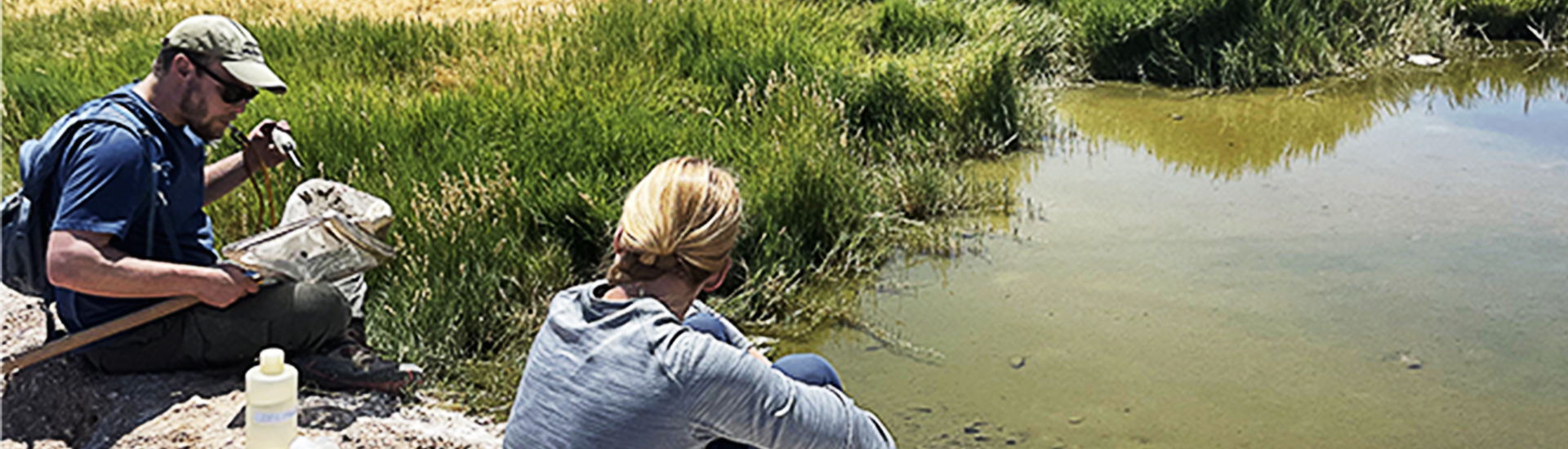
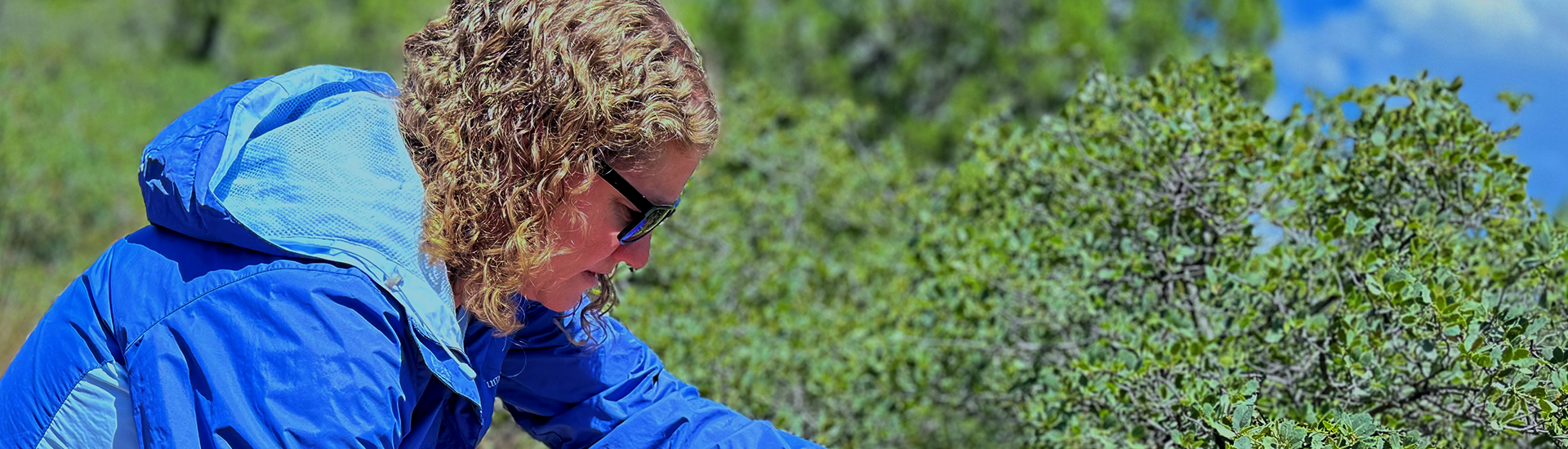
Hodel now studies biodiversity throughout different environments, using collected plants, genomics, bioinformatics and computational frameworks to uncover their evolutionary histories. Flagstaff’s setting is particularly helpful for his work because of the various biomes seen across shorter distances.
“One of the most interesting facets of collecting is realizing how different plants can grow pretty close to one another,” Hodel said. “Arizona has excellent places for doing that because it has such intense elevational gradients. You can see how different environments, different climatic conditions or different substrates, like the geology that plants are growing on, can be important for impacting what they look like.”
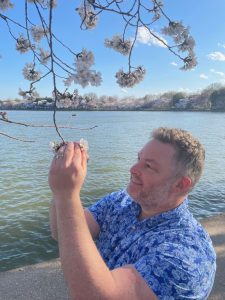
In addition to teaching at NAU, Hodel is the curator of the Deaver Herbarium, an assembly of protected plant specimens that acts as proof of biodiversity.
“A herbarium is essentially a biodiversity library where instead of books, we have sheets that have pressed plant specimens on them,” Hodel explained.
Instead of viewing them as mere artifacts, the curator sees his herbarium specimens as guides to answer important questions. Utilizing both physical collections and genomics enable researchers like Hodel to investigate how plants have adapted to their environments and how they might react to future changes.
Hodel’s research partly concentrates on Prunus crops like almonds, apricots, cherries, peaches and plums, but his discoveries mainly intend to explain how nature (genetics) and nurture (environment) decide the traits plants develop.
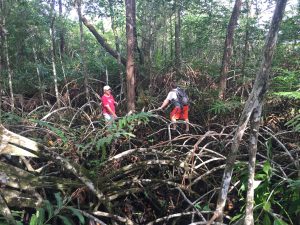
“I’m broadly interested in figuring out how the genome and the environment shape the different phenotypic traits that we see on plants,” Hodel said. “And I think there’s a lot of different systems that can help us get at that question.”
The question becomes increasingly relevant as environments and climate conditions shift. Hodel expressed concern over plants’ ability to respond quickly enough to keep up with those changes.
“It’s been able to tolerate a lot of climatic changes over the past and shift and adapt or move to open habitat as the climate changes,” Hodel said. “But those are on radically different temporal scales than what we’re talking about right now.”
The curator found two major challenges in plants’ adaptability – their ability to genetically adapt to climate change and their inability to move away from unfavorable situations.
“Plants are rooted where they are and can’t move,” Hodel said. “We’ve got to take a broader view of why and how they interact with their environment around them the way they do.”
Combining the history upheld in the Deaver Herbarium with his current genetic research, Hodel wants to better understand how plants respond to their environments and what that can mean for their future.
The curator encourages aspiring scientists to volunteer for the herbarium and ask professors like him how they can get involved.
You can find the Deaver Herbarium at NAU’s Biological Sciences building. To learn more about Hodel’s work, click here!