What does an Arizona landscape sound like? And what can music tell us about the people, animals, environments, and histories that have moved through it?
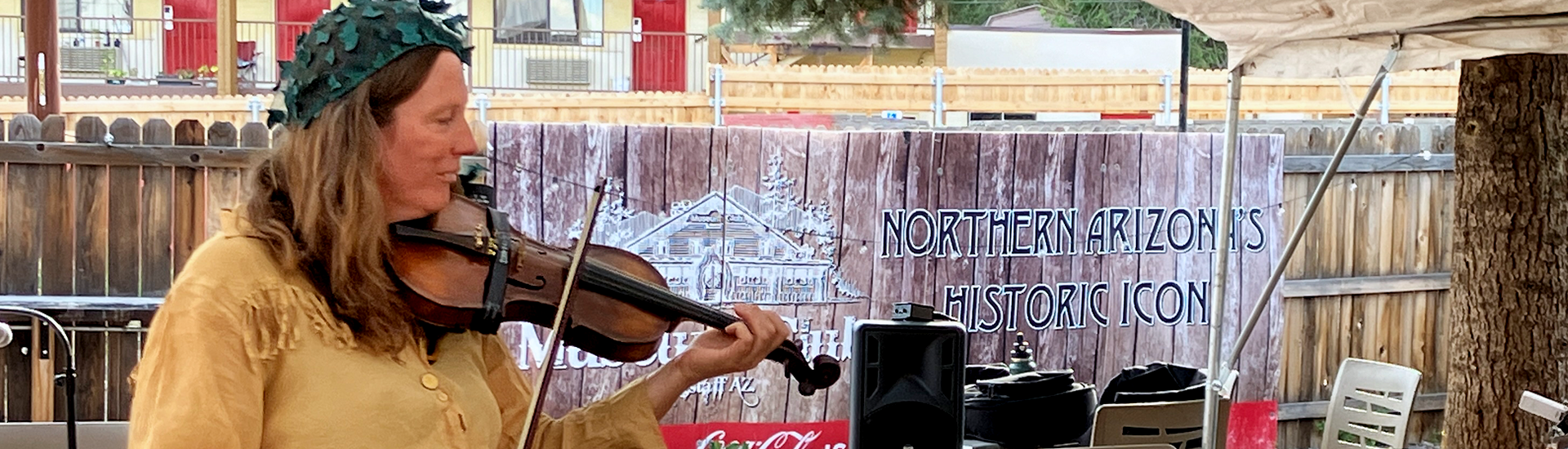
At this year’s Flagstaff Festival of Science, Wild Steps will invite participants to explore Arizona’s natural landscapes through live music, sound, movement, and cultural history. Fiddler and researcher Dr. Kate Rose and guitarist Armand Ramirez will use fiddle, guitar, rhythm, storytelling, and audience participation to explore the ways geography and the natural world shape musical traditions.
Arizona’s music is inseparable from movement across its landscapes. Indigenous, Hispanic, Mexican, Anglo, Celtic, and other traditions have met and changed here over generations. Instruments, rhythms, dances, songs, and stories carry traces of migration, work, community gatherings, animals, weather, and the acoustics of the places where people made music.
The program asks participants to listen differently. How does sound behave outdoors? How might people imitate or respond to sounds around them? What happens when rhythms associated with work, travel, dance, or animals become music? And how do musical traditions change when people meet one another in a particular place?
This won’t be a lecture where everyone sits quietly. Wild Steps programs are built around participation. Expect live fiddle and guitar, stories, musical demonstrations, rhythm and movement, opportunities to experiment with sound, and probably some dancing. Children and adults can join in at their own level, and the audience’s observations and responses become part of the program.
That approach grows from Rose’s unusual combination of scholarship and traditional music. She holds a PhD in Comparative Literature, studied Irish fiddle and dance in County Clare, lived and worked for many years in France and China, and now researches and recreates folk traditions in Arizona. Rose and Ramirez travel around the state as performers and Arizona Humanities/AZ Speaks presenters, bringing interactive music, dance, storytelling, and humanities programs to libraries, schools, museums, theaters, festivals, senior communities, and other public spaces. Their work has also been featured on radio, and Rose recently gave a keynote for Arizona Women in Higher Education.
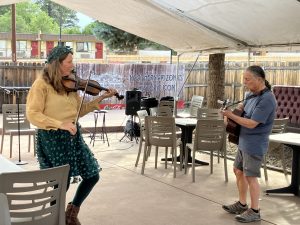
Their nonprofit, Wild Steps, connects research with participatory arts so that cultural knowledge becomes something people can hear, try, move through, and experience together.
For Rose, the Festival of Science is a natural fit: careful listening is part of both research and music. A landscape can be studied through geology, ecology, history, and biology—but it can also be listened to. This program asks what we might discover when we do.
More about Wild Steps: