How do you know a wolf has been somewhere if you never actually see the wolf? For wildlife biologists, the answer is often written on the ground. On October 3 at the Pioneer Museum, Learning from Lobos will invite Festival participants to step into the field as wildlife scientists and explore one of the most fundamental tools of field biology: tracking. Using real Mexican gray wolf footprints, participants will investigate the clues wolves leave behind, learn how scientists distinguish tracks from those of other animals, and create their own wolf track print to take home.
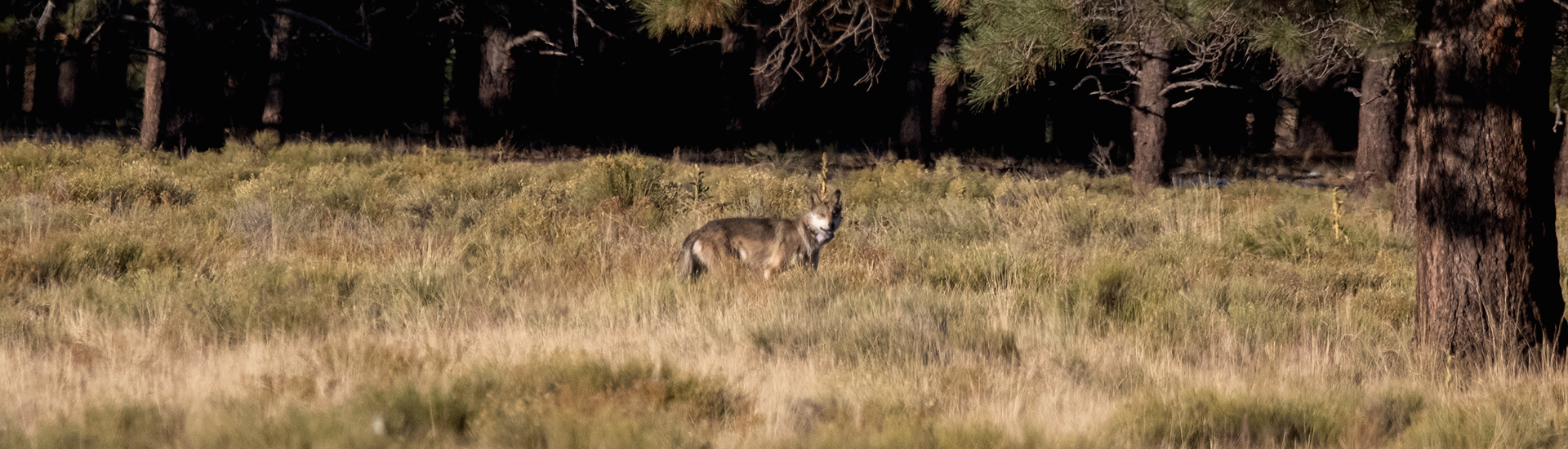
But the workshop is about more than identifying footprints. I have spent much of my career thinking about how we learn about large carnivores, particularly animals such as wolves who are frequently talked about but rarely encountered. Mexican gray wolves move through vast landscapes in Arizona and New Mexico, and most of us will never see one in the wild. Yet their presence can still be discovered through tracks, scat, camera images, movement data, and the many relationships they have with other animals and the landscape around them. Learning to read those signs requires patience. You have to slow down, look carefully, ask questions, and accept that you may not immediately know the answer. Those are also some of the qualities that make field science so exciting.
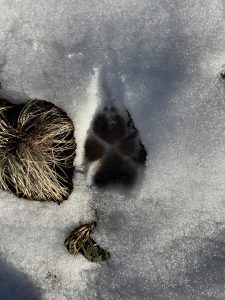
That philosophy is at the heart of the Grand Canyon Wolf Recovery Project’s award-winning Learning from Lobos program. Rather than simply telling students facts about wolves, we use hands-on, inquiry-based activities to encourage participants to investigate, make observations, ask questions, and arrive at their own discoveries. Tracks are particularly wonderful for this because a footprint is both scientific evidence and a story: Who made it? Where were they going? Were they walking or running? Was another animal nearby? What can a few marks in the soil tell us about a life we never witnessed directly?
For me, this also connects to a much bigger idea in my work: learning to pay attention to the animals with whom we share landscapes. Wolves are not simply numbers in a population count or symbols in a conservation debate. They are individuals moving through complex social and ecological communities. The more closely we learn to observe their lives, the more interesting and complicated the story becomes.
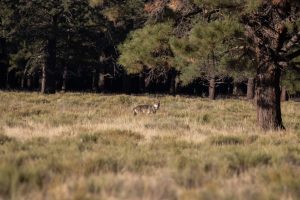
During the Festival workshop, children, teenagers, and adults can get hands-on with the science. We will look closely at Mexican wolf tracks, explore how biologists collect information without needing to capture or even see an animal, and experiment with interpreting the clues a wolf might leave behind. And everyone gets to make a track of their own.
My hope is that participants leave with more than a print to take home. Perhaps the next time they walk a trail, cross a muddy patch of ground, or notice an unfamiliar footprint, they will stop for a moment and wonder:
Who has been here before me? That simple act of noticing is often where science, and a different relationship with the wild world, begins.
Written by Claire Musser