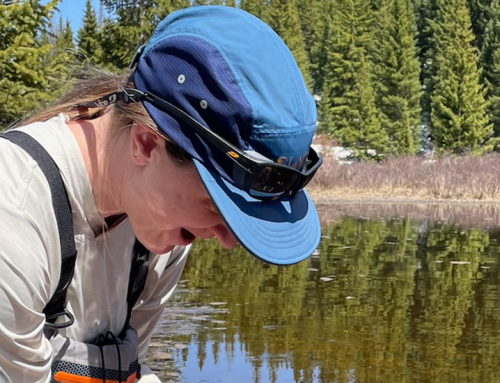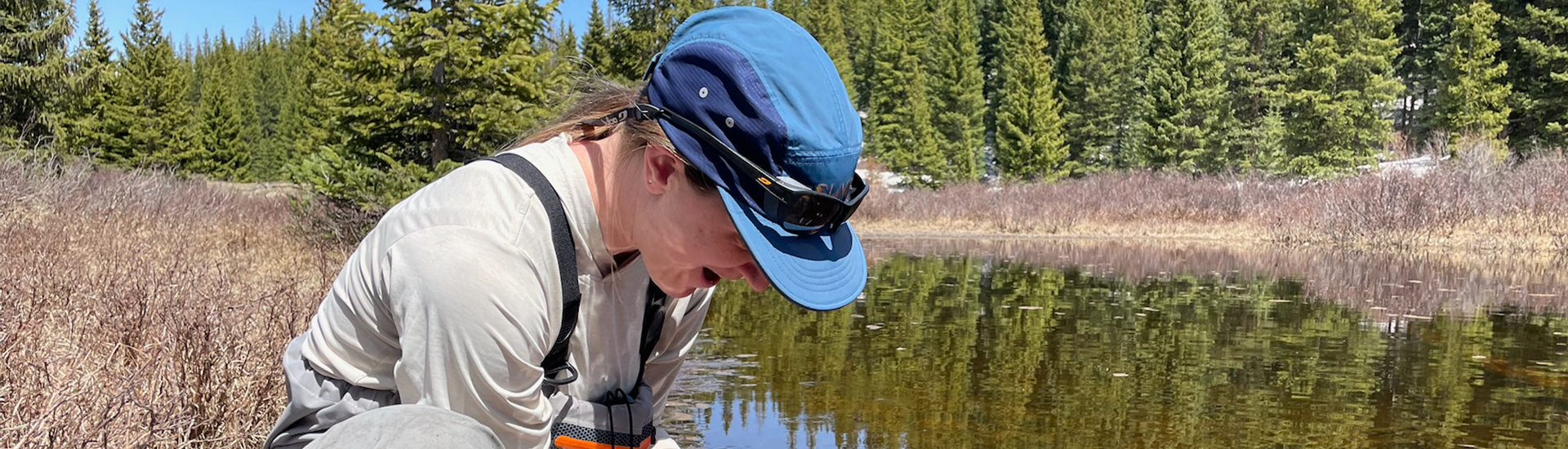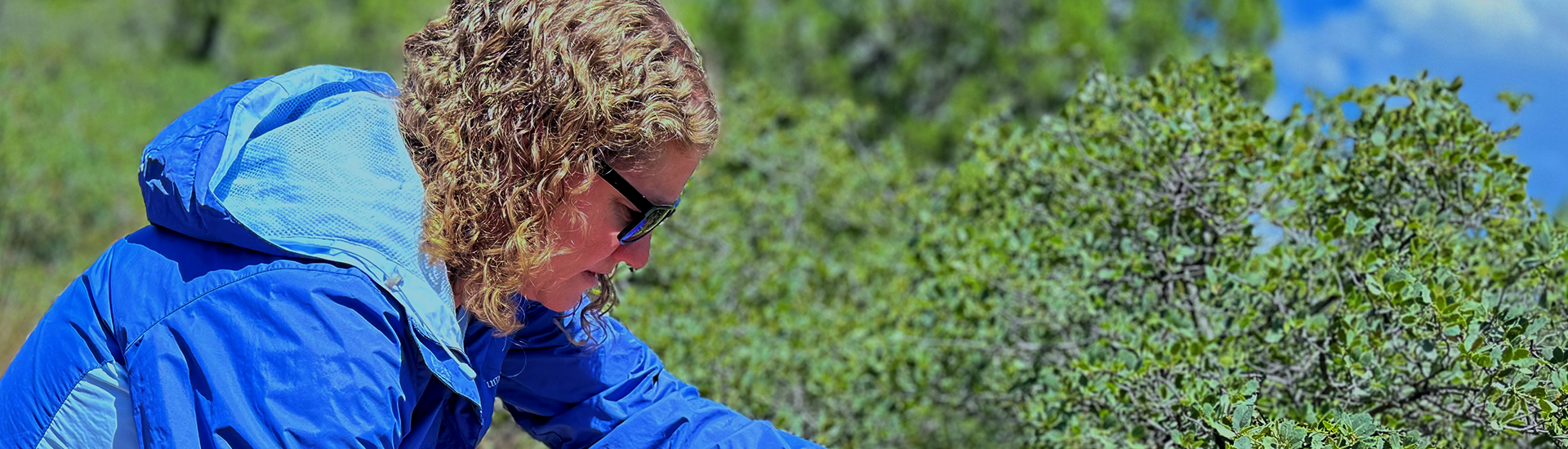
When ecologist Clare Aslan walks through a forest, she doesn’t just see trees.
“It’s impossible to turn that off,” Aslan said. “We talk about thinking like an ecologist.”
As an associate professor and director of Northern Arizona University’s School of Earth and Sustainability, Aslan studies the relationships between plants, animals and people. Her research explores how ecosystems respond to challenges like climate change, invasive species and wildfires with the goal of helping communities make more informed conservation decisions.
Aslan moved to Flagstaff in 2014 after working as a conservation scientist at the Arizona-Sonora Desert Museum and completing postdoctoral research in Hawaii. Her love of the outdoors sparked her interest in ecology as a college freshman, but she soon grew fascinated by something deeper: the connections between species.
“It’s so cool how we can have species that will depend upon and help each other,” she said. “The kind of old-fashioned view of ecology was that everything was always attacking each other.”
Today, those interactions are at the heart of her research. Aslan studies pollinators, endangered plants and the ecological relationships that allow ecosystems to function. She also examines how northern Arizona landscapes recover after wildfire, including returning to research sites on the North Rim of the Grand Canyon following last year’s Dragon Bravo and White Sage fires.
Rather than viewing natural disturbances only as disasters, Aslan hopes to understand why some areas recover more quickly than others. She believes that knowledge could help land managers focus restoration efforts where they are needed most while allowing resilient landscapes to regenerate naturally.
“I think that the more we learn, the more we understand natural systems, the higher our chances of working kind of with that natural adaptation and with that natural resilience, instead of against it,” Aslan said.
For Aslan, that work is especially important in Flagstaff, where forests, wildlife and people are closely connected. As changing temperatures, drought and wildfire continue to reshape the Southwest, understanding those ecological relationships can help communities adapt while protecting biodiversity.
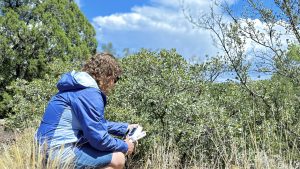
“We need more people conducting more studies,” Aslan said. “We need to better understand the natural world. We need to understand how we’re affecting it and how it responds.”
Whether she’s hiking through a recently burned forest, studying endangered plants or teaching the next generation of environmental scientists, Aslan hopes her research encourages people to look beyond individual species and appreciate the complex relationships that sustain life. By learning how ecosystems naturally adapt and recover, she believes communities can make decisions that work alongside nature rather than against it.
Interviewed and written by Dominic Borja